
Desde la Caja I From the Box_
2022 I Edificio Alonso, Santiago de Chile_
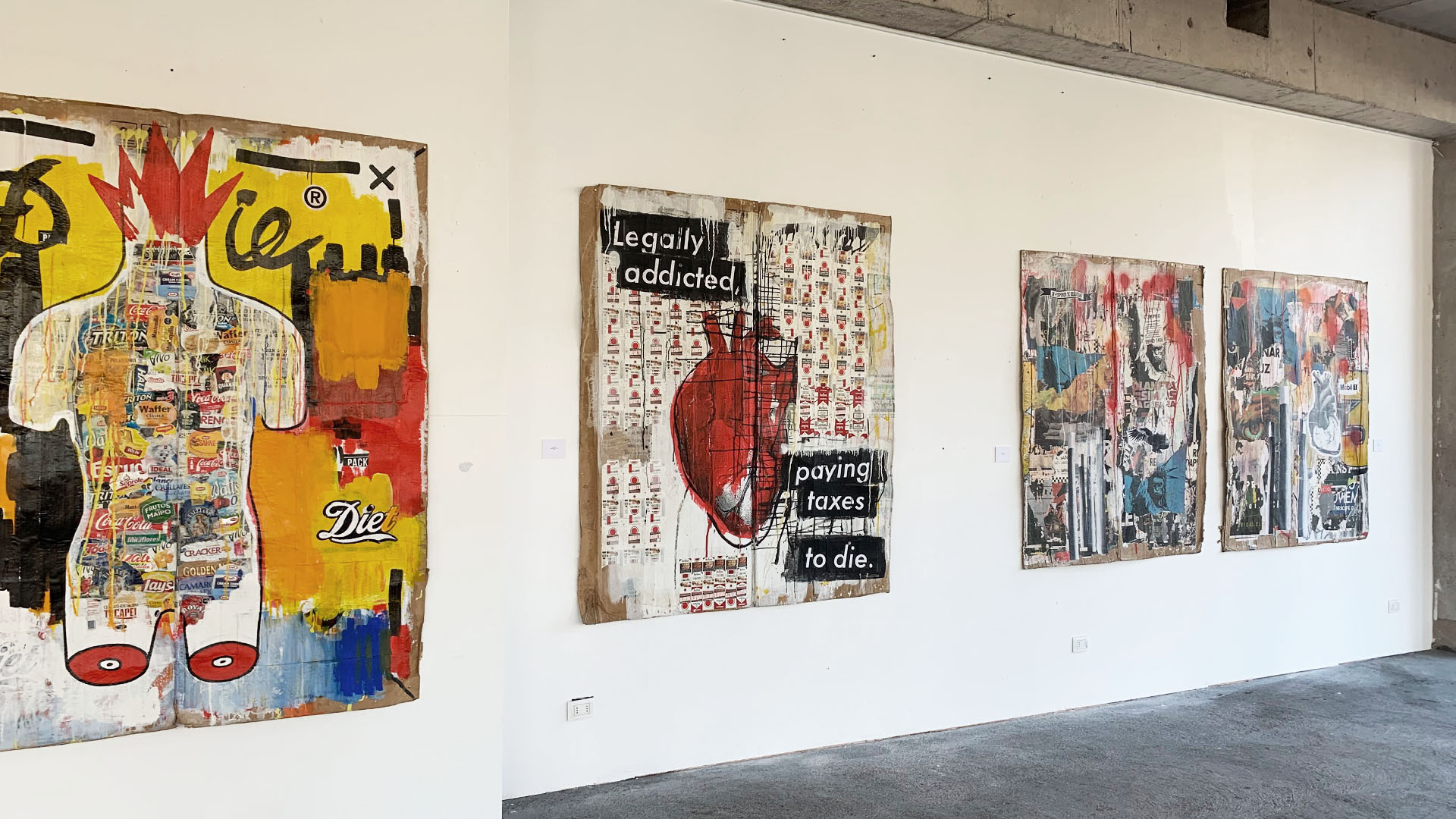
Organizada por Galería ARTIUM en la sala de exposiciones del Edificio Alonso, en Santiago de Chile, “Desde la Caja” es la primera muestra individual que reúne una selección de trabajos desarrollados durante la pandemia de COVID-19, particularmente en el período de cuarentena y confinamiento total.
En ese contexto, el espacio doméstico adquirió una nueva dimensión. El departamento de 70 m², concebido originalmente como lugar de habitación, se transformó también en taller y espacio de trabajo. La vida cotidiana quedó contenida entre sus muros, mientras la mirada hacia el exterior se reducía a la perspectiva posible desde una suerte de “cárcel” improvisada.
Es precisamente desde ese encierro —desde esa caja física y mental— que surgen los trabajos que conforman esta exposición. El confinamiento, la restricción del espacio y la experiencia de habitar un territorio limitado se convierten así no solo en las condiciones en las que fueron producidas las obras, sino también en parte de su contenido y significado. “Desde la Caja” alude, entonces, a ese lugar cerrado desde el cual, paradójicamente, fue posible observar, experimentar y crear.
Organized by Galería ARTIUM in the exhibition hall of the Edificio Alonso in Santiago, Chile, “From the Box” is the first solo exhibition to bring together a selection of works developed during the COVID-19 pandemic, particularly during the period of quarantine and total confinement.
In this context, the domestic space acquired a new dimension. The 70-square-meter apartment, originally conceived as a place to live, was transformed into both a home and a workspace. Everyday life became contained within its walls, while the view of the outside world was reduced to what could be seen from a kind of improvised “prison.”
It is precisely from this confinement—from this physical and mental box—that the works presented in the exhibition emerged. Confinement, the restriction of space, and the experience of inhabiting a limited territory became not only the conditions under which the works were created, but also part of their content and meaning. “From the Box” thus refers to that enclosed place from which, paradoxically, it became possible to observe, experience, and create.
Texto Curatorial I Curatorial Text_
El talento artístico es un don ineludible que se expresa más temprano que tarde. No se puede escapar a esa pulsión inconsciente que llama a la puerta en ocasiones reiteradas, hasta que se la deja entrar y se le invita a incorporarse a la cotidianeidad y la vida de quienes recorrerán el camino del arte. Hay artistas cuyo talento es innato y otros que forman su carácter con gran disciplina, ambas necesarias por cierto, para un buen resultado en el área creativa.En el caso del artista Gonzalo Pino el acercamiento a su vocación plástica se genera en su etapa adulta, desprendido desde su mundo profesional y laboral. Pino ha trabajado como director de arte en agencias de publicidad y de diseño, donde ha podido explayarse en la comunicación visual, ligada a una estética que le es propia.
Hoy podemos observar una colección de obras suyas, trabajos que el artista realizó en la primera etapa de la pandemia en la que aún seguimos inmersos. Estas obras, concebidas desde el encierro, son una propuesta que nace del diseño gráfico hacia el ensayo visual, sumando agregados desde el collage y utilizando la pintura como soporte principal. En esta situación especial de encierro el artista procesó la creación de estas telas desde el interior, desde el espacio propio que habita, “desde su caja” (su departamento) y el trabajo plástico se convirtió en una herramienta de sanidad mental, un escape a la realidad dramática de incertidumbre y caos global. La necesidad imperiosa de plasmar el proceso que vivía en sus trabajos fue ineludible.
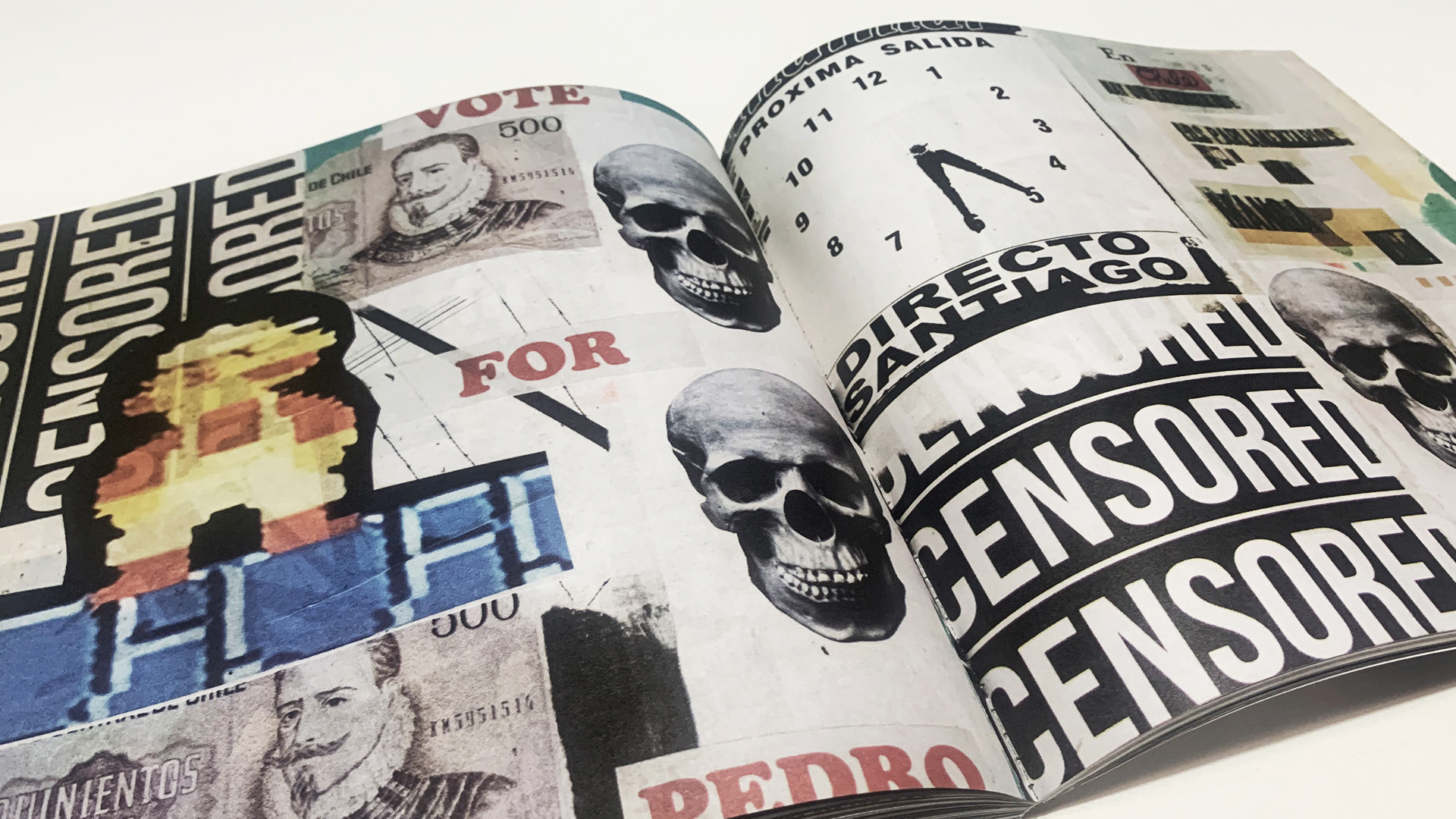
El trabajo realizado en “Desde la caja” se convirtió en obras hechas con materiales simples disponibles a mano, como cartón, diferentes tipos de papeles, pintura acrílica y spray, junto a materiales y técnicas mixtas. Materiales que se encontraban en su departamento lo que significó adentrarse en un trabajo experimental de prueba y error, al no tener conocimiento preciso del comportamiento de estos componentes poco nobles.
Las temáticas tratadas en esta serie de trabajos son variadas y siguen un desarrollo retroalimentado. Transitan desde la calle y el complejo mundo de personajes que en ella habitan, lo cotidiano, la repetición de los hábitos diarios, la banalidad de la publicidad, la gran invasión de información que tenemos hoy y la necesidad de limpiar ese mundo de imágenes que recibimos; entre otras y ligadas a un concepto de consumismo frente al cual el artista es crítico. La música y el pop no se ausentan de sus áreas de interés. Aparecen en forma recurrente alusiones a ellas en sus composiciones.
Su trabajo pictórico nace como un proceso espontáneo y libre en el que explora, recopila y recicla materiales. El artista los revaloriza otorgándoles un fin cromático y formal, una función compositiva estética. Sus obras pueden leerse entonces desde diferentes enfoques, otorgando significados expuestos, como también pudiendo el espectador realizar sus propias y subjetivas interpretaciones, siempre acompañadas de una lectura visual con indicaciones desde la gráfica y el diseño.
Hay un guiño hacia Rauschenberg en la reutilización y nueva función de los materiales de desecho, un homenaje a Basquiat en la potencia de su gestualidad gráfica, recuerdos que aluden al Pop Art, mezclados con la aplicación del spray con marca de grafiti de Street Art, quizá reseña de Bansky y la globalización del nuevo milenio, reinterpretadas desde su visión pandémica contemporánea. El color y los elementos gráficos, la señalética, el texto incorporado a la imagen, la representación común no escapan de su pincel, ni de sus tijeras y adhesivos, siempre unidos bajo una abstracción neoexpresionista que congrega las partes, mostrándonos un trabajo renovado, peculiarmente talentoso que podemos admirar y disfrutar en esta exhibición.
Luz Barros, agosto 2022.
Artistic talent is an inescapable gift that reveals itself sooner or later. There is no escaping the unconscious impulse that repeatedly knocks at the door until it is finally allowed in and invited to become part of the everyday life of those who choose to follow the path of art. Some artists possess an innate talent, while others develop their character through great discipline—both, certainly, being necessary for achieving a successful outcome in the creative field.
In the case of artist Gonzalo Pino, his approach to his artistic vocation emerged during adulthood, growing out of his professional and working life. Pino has worked as an art director in advertising and design agencies, where he has been able to fully explore visual communication, grounded in an aesthetic that is distinctly his own.
Today, we can observe a collection of his works, created during the first stage of the pandemic, in which we remain immersed. Conceived within confinement, these works represent a proposal that moves from graphic design toward visual experimentation, incorporating elements of collage and using painting as its primary medium. In this particular situation of isolation, the artist developed these canvases from within, from the personal space he inhabited,“from his box” (his apartment). The artistic process became a tool for mental well-being, an escape from the dramatic reality of global uncertainty and chaos. The compelling need to translate the experience of this period into his work was unavoidable.
The work produced for “From the Box” evolved into a body of pieces made with simple materials that were readily available: cardboard, different types of paper, acrylic paint, and spray paint, together with mixed materials and techniques. Since these materials were found within his apartment, the artist was drawn into an experimental process of trial and error, without precise knowledge of how these unconventional and humble materials would behave.
The themes explored throughout this series are varied and develop through a process of mutual feedback. They move from the street and the complex world of the characters who inhabit it, to everyday life, the repetition of daily habits, the banality of advertising, the overwhelming amount of information we are exposed to today, and the need to cleanse ourselves of the incessant flow of images we receive. These themes are also connected to the concept of consumerism, toward which the artist takes a critical stance. Music and pop culture are likewise present within his areas of interest, recurring as references throughout his compositions.
His pictorial practice emerges as a spontaneous and unrestricted process in which he explores, collects, and recycles materials. The artist revalues these elements by giving them a new chromatic and formal purpose, transforming them into components of an aesthetic and compositional language. His works can therefore be approached from different perspectives, offering explicit meanings while also allowing viewers to construct their own subjective interpretations, always accompanied by a visual reading informed by elements of graphic design and visual communication.
There is a nod to Rauschenberg in the reuse and transformation of discarded materials; an homage to Basquiat in the force of his graphic gesture; echoes of Pop Art, combined with the use of spray paint and the visual language of graffiti and Street Art—perhaps recalling Banksy and the globalization of the new millennium—all reinterpreted through the artist’s contemporary pandemic experience. Color and graphic elements, signage, text incorporated into the image, and representations drawn from everyday life all find their way onto his canvases, as well as into his use of scissors and adhesives. These elements are brought together through a neo-expressionist abstraction that unifies the various parts, revealing a renewed and distinctive body of work—one of remarkable talent that we can admire and enjoy in this exhibition.
Luz Barros, August 2022.
publicaciones_
publications_
©2026. Gonzalo Pino Infante.
Todos los derechos reservados I All rights reserved.